
Migrating from NetSuite to ERPNext can help businesses reduce ERP costs, gain greater flexibility, and eliminate recurring licensing challenges. We provide end-to-end NetSuite to ERPNext migration services, including data migration, system configuration, customizations, integrations, user training, and go-live support. Our structured migration approach ensures a smooth transition with minimal disruption while helping your organization streamline operations.
Move from costly ERP subscriptions
Seamless Migration from Netsuite to ERPNext
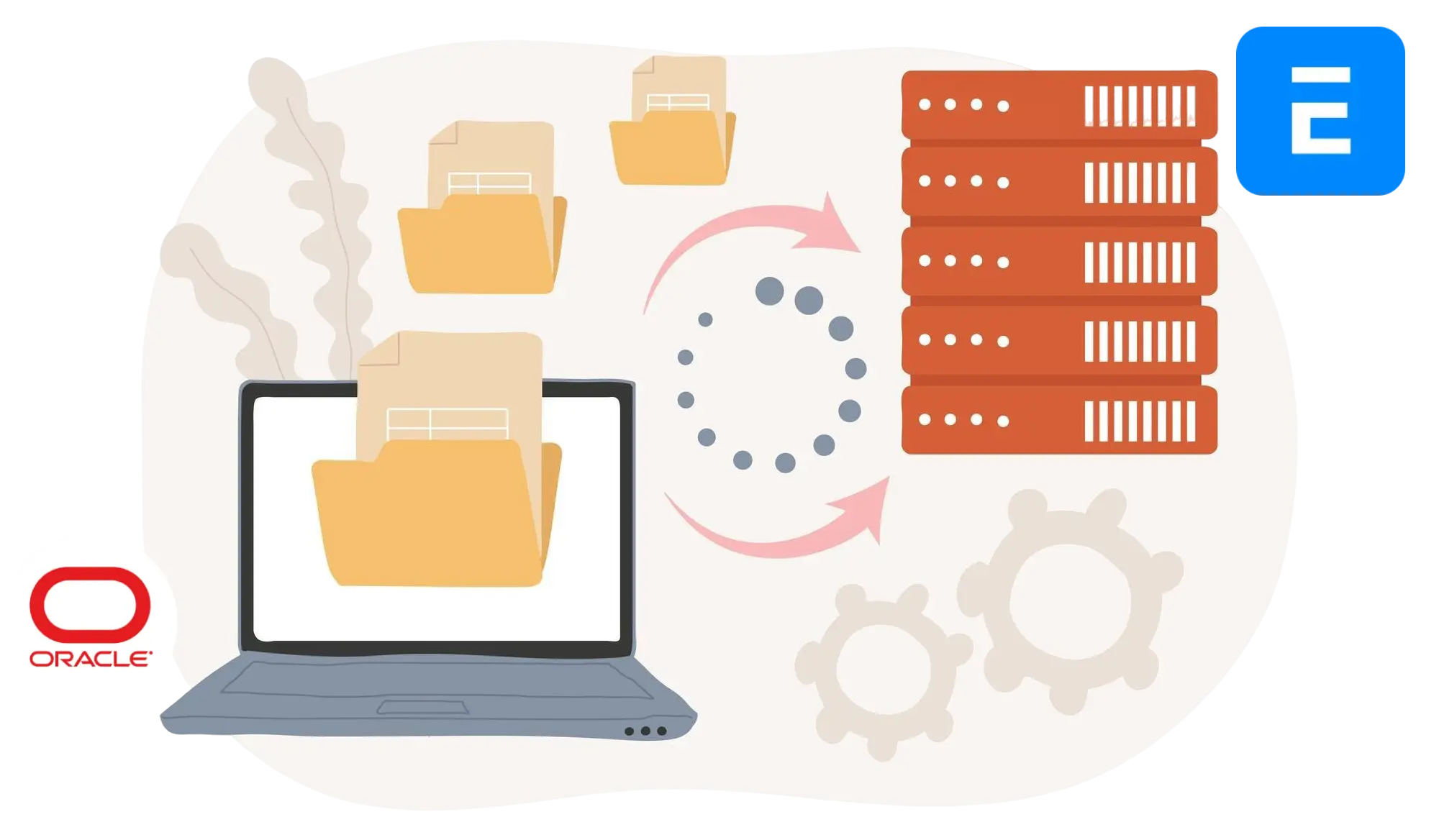
Our Proven Netsuite to ERPNext Migration Methodology
Discovery & Requirements Assessment
We begin by evaluating your current NetSuite environment, business processes, customizations, integrations, and operational requirements to define the migration scope and objectives.
Data Audit & Migration Planning
Our team reviews your NetSuite data, including customers, suppliers, inventory, financial records, projects, assets, and historical transactions to create a detailed migration roadmap.
ERPNext Environment Setup
We configure ERPNext based on your business structure, including company settings, modules, user roles, permissions, workflows, and reporting requirements.
Data Cleansing & Preparation
Before migration, we cleanse and validate your data by removing duplicates, correcting inconsistencies, and ensuring data quality for a successful transition.
Data Migration & Mapping
Business-critical data is securely extracted from NetSuite, mapped to ERPNext structures, and migrated while preserving data integrity and accuracy.
Customization & Integration
Required ERPNext customizations, workflows, reports, dashboards, and third-party integrations are implemented to support your unique business processes.
UAT & Data Validation
Comprehensive testing is performed to verify data accuracy, system functionality, workflows, reports, and integrations. Key stakeholders participate in user acceptance testing.
Training & Go-Live
Your team receives role-based ERPNext training before the final migration and go-live process, ensuring a smooth transition and rapid user adoption.
Post Go-Live Support
Following deployment, we provide ongoing support, troubleshooting, performance optimization, and system enhancements to ensure long-term ERP success.
Let's Discuss Your ERP Requirements
Ready to streamline operations and unlock the full potential of ERPNext? Share your business requirements with our experts, and we'll provide personalized recommendations and a tailored solution that aligns with your goals. Whether you need implementation, training, or support, we're here to help you find the right path to ERP success.
Netsuite or ERPNext
A Side-by-Side Comparison
| wdt_ID | Feature | NetSuite | ERPNext |
|---|---|---|---|
| 1 | Licensing Model | Subscription-based with per-user licensing | Open-source with no per-user licensing fees |
| 2 | Total Cost of Ownership | Higher licensing and ongoing subscription costs | Lower implementation and long-term ownership costs |
| 3 | Open Source | No | Yes, fully open-source |
| 4 | Deployment Options | Cloud-only deployment | Cloud, self-hosted, and on-premise options |
| 5 | Accounting & Finance | ✔ Comprehensive financial management and reporting | ✔ Integrated accounting, budgeting, and financial controls |
| 6 | General Ledger | ✔ Multi-entity financial management | ✔ Real-time general ledger and financial tracking |
| 7 | Accounts Payable & Receivable | ✔ Vendor and customer payment management | ✔ Automated invoicing, collections, and payment tracking |
| 8 | Budgeting & Financial Planning | ✔ Advanced budgeting and forecasting tools | ✔ Budget management with real-time financial visibility |
| 9 | CRM | ✔ Customer relationship and sales management | ✔ Fully integrated CRM with lead and opportunity tracking |
| 10 | Sales Management | ✔ Quote-to-cash process management | ✔ End-to-end sales lifecycle management |
| 11 | Procurement Management | ✔ Supplier and purchasing workflows | ✔ Integrated purchasing, approvals, and supplier management |
| 12 | Inventory Management | ✔ Inventory tracking and stock control | ✔ Advanced inventory, batch, serial, and stock management |
| 13 | Warehouse Management | ✔ Warehouse operations management | ✔ Multi-warehouse management with real-time visibility |
| 14 | Manufacturing Management | ✔ Manufacturing functionality available | ✔ Production planning, work orders, and shop floor control |
| 15 | Material Requirements Planning (MRP) | ✔ Demand and supply planning | ✔ Built-in MRP for efficient production planning |
| 16 | Project Management | ✔ Project tracking and resource management | ✔ Project costing, billing, timesheets, and profitability tracking |
| 17 | Asset Management | ✔ Asset tracking and depreciation management | ✔ Full asset lifecycle and maintenance management |
| 18 | Maintenance Management | Limited maintenance functionality | ✔ Preventive and corrective maintenance management |
| 19 | Human Resource Management | ✔ Basic HR capabilities | ✔ Employee lifecycle, attendance, leave, and performance management |
| 20 | Payroll Management | Often requires third-party solutions | ✔ Fully integrated payroll processing and compliance support |
| 21 | Employee Self-Service | ✔ Employee portal access | ✔ Self-service portal for leave, claims, attendance, and payroll |
| 22 | Workflow Automation | ✔ Automated approvals and business processes | ✔ Flexible workflow automation with custom approval rules |
| 23 | Custom Dashboards & Reports | ✔ Role-based dashboards and reporting | ✔ Real-time dashboards, KPIs, and custom reporting tools |
| 24 | Multi-Company Management | ✔ Manage multiple legal entities | ✔ Centralized management of multiple companies |
| 25 | Multi-Currency Support | ✔ Global currency support | ✔ Multi-currency transactions and consolidated reporting |
| 26 | Third-Party Integrations | ✔ Extensive integration ecosystem | ✔ Open APIs and seamless third-party integrations |
| 27 | Customization Flexibility | ✔ Customizable platform with developer support | ✔ Highly customizable workflows, forms, reports, and applications |
Why Businesses Move from Netsuite to ERPNext
Many organizations migrate from NetSuite to ERPNext to reduce recurring subscription costs, gain greater flexibility, and avoid vendor lock-in. While NetSuite is a powerful cloud ERP, businesses often face increasing licensing expenses as users and requirements grow. ERPNext offers a fully integrated ERP platform with Accounting, CRM, Inventory, Manufacturing, Procurement, Projects, HR, Payroll, Asset Management, and Reporting in a single solution with significantly lower ownership costs.
Key Advantages of ERPNext Over NetSuite
- No per-user licensing fees
- Fully open-source and vendor-independent
- Lower total cost of ownership
- Greater control over data and hosting environment
- Built-in Manufacturing and MRP capabilities
- Integrated HR and Payroll management
- Built-in Asset and Maintenance Management
- Flexible customization and workflow automation
- Self-hosted, cloud, and on-premise deployment options
- Faster implementation and easier maintenance
Bottom Line
NetSuite is a robust cloud ERP platform, particularly for larger enterprises. However, ERPNext provides a highly capable alternative that delivers comprehensive ERP functionality, greater flexibility, and significantly lower ownership costs. For businesses looking to modernize operations while maintaining control and reducing expenses, ERPNext is often the smarter long-term choice.
Your all-in-one business management platform
Get real-time visibility across departments from a single system.
Frequently Asked Questions
1. Why should I migrate from NetSuite to ERPNext?
Many businesses migrate from NetSuite to ERPNext to reduce recurring licensing costs, gain greater customization flexibility, avoid vendor lock-in, and benefit from a fully integrated open-source ERP platform.
2. What data can be migrated from NetSuite to ERPNext?
We can migrate customers, suppliers, products, inventory records, financial data, sales orders, purchase orders, invoices, projects, assets, employee records, and historical transactions.
3. Can ERPNext replace the functionality of NetSuite?
Yes. ERPNext provides integrated modules for Accounting, CRM, Sales, Procurement, Inventory, Manufacturing, Projects, HR, Payroll, Asset Management, and Reporting, covering the core needs of most businesses.
4. How long does a NetSuite to ERPNext migration take?
The timeline depends on factors such as data volume, number of users, customizations, integrations, and business complexity. A detailed migration plan is provided after the initial assessment.
5. Will there be downtime during the migration?
Our migration methodology is designed to minimize business disruption. Most migration activities are completed in stages, with final cutover carefully planned to ensure a smooth transition.
6. Can custom NetSuite workflows and reports be recreated in ERPNext?
Absolutely. We analyze your existing NetSuite workflows, reports, dashboards, and automations and recreate or enhance them using ERPNext’s flexible customization framework.
7. What happens to my historical data?
Historical data can be migrated based on your business requirements. We help determine which records should be transferred and ensure critical information remains accurate and accessible.
8. Can ERPNext integrate with our existing business applications?
Yes. ERPNext supports API-based integrations and can connect with eCommerce platforms, payment gateways, logistics providers, business intelligence tools, CRM systems, and other third-party applications.
9. How do you ensure data accuracy during migration?
We follow a structured migration process that includes data cleansing, validation, reconciliation, testing, and user acceptance testing to ensure data integrity throughout the project.
10. Will my employees receive ERPNext training?
Yes. We provide role-based training for end users, managers, administrators, and technical teams to ensure a smooth transition and successful adoption of ERPNext.
11. Is ERPNext suitable for growing and multi-company businesses?
Yes. ERPNext supports multi-company operations, multiple locations, multi-currency transactions, and scalable business processes, making it ideal for growing organizations.
12. Do you provide support after the migration is complete?
Yes. We offer post-go-live support, system optimization, troubleshooting, maintenance, and ongoing consulting services to help you maximize the value of ERPNext.
13. How much does a NetSuite to ERPNext migration cost?
The cost depends on factors such as data volume, customizations, integrations, business processes, and project complexity. We provide a tailored proposal after assessing your requirements.
14. How do I know if ERPNext is the right alternative to NetSuite?
Our ERP consultants can evaluate your current NetSuite environment, operational requirements, and growth objectives to determine whether ERPNext is the best fit and develop a migration roadmap tailored to your business.